10 hr
Private Mount Fuji Day Trip with English-Speaking Guide
Personalized full-day journey to Japan's iconic peak with flexible itinerary and hotel transfers
Reserve
Hand-picked by our editors — only the best 5 experiences from 47 reviewed.
Verified partners for every tour, free cancellation where available, and instant confirmation on every booking.
10 hr
Personalized full-day journey to Japan's iconic peak with flexible itinerary and hotel transfers
Reserve
10 hr
Discover Japan's iconic mountain on a personalized 10-hour journey with hotel transfers and expert guide.
Reserve
11 hr
Personalized 10-hour journey to Japan's sacred peak with English-speaking driver and luxury transport
ReservePrices from verified partners. Availability updates in real time at checkout. Free cancellation policies apply where shown.
The landmarks, rooms, and views travelers on this tour remember — all visible on a single visit.
Located behind the shops, this historic site offers panoramic views of the Fuji Five Lakes region. It stands as a spiritual gatekeeper at 2,300 meters.
A gentle path for non-climbers that traverses the mountain side without requiring an entrance fee. It provides unique perspectives of the northern slopes.
The most iconic starting point for those heading toward the summit. It sees thousands of climbers during the peak summer season.
A popular viewing deck providing unobstructed views of Fujiyoshida City below. It is a critical stop for your mt fuji private tour from shinjuku photography.
Private vehicle services provide superior control for time-sensitive travel, whereas the Fuji Excursion train offers a reliable, scheduled rail connection for those prioritizing ease of transit. Choosing a mt fuji private tour from shinjuku tours experience ensures door-to-door convenience, while the rail route is better for travelers seeking fixed, scenic transit.
| Feature | Top pick Private Tour | Fuji Excursion |
|---|---|---|
Flexibility |
High - fully customizable schedule | |
Comfort level |
High - personal vehicle space | |
Capacity for luggage |
High - vehicle trunk storage | |
Direct access to 5th station |
Yes - door-to-door service | |
Group size |
Private - 1 to 15 passengers | |
Cost |
Varies by group size | |
| See tickets → |
Verdict: If you require logistical autonomy, the mt fuji private tour from shinjuku tickets are the optimal choice, while the Fuji Excursion remains the most straightforward rail alternative for solo commuters.
Choose your ticket, select your date, and reserve in under two minutes. Secure checkout handled by our verified partner.
Instant confirmation by email, with a mobile voucher you can save offline. No printing, no queuing at a collection desk.
Arrive at the entrance, show your voucher on your phone, and walk in. Most tickets include priority or skip-the-line access.
Practical details for your visit straight from our verified partners — hours, access, rules, and how to get there.
Sturdy hiking boots are essential as sneakers or fashion footwear are unsafe for mountain terrain. Layered moisture-wicking clothing is recommended to handle temperature drops at 2,300 meters.
Use lockers available at the station for excess gear before your mt fuji private tour from shinjuku. Rangers may conduct equipment checks to ensure hikers have adequate supplies and headlamps.
The observation point at Komitake Shrine provides the best angles for your mt fuji private tour from shinjuku photos. Use a tripod only in designated areas to avoid obstructing other visitors.
While the 5th station facilities are accessible, the trails leading toward the summit involve steep, rugged paths. The mt fuji private tour from shinjuku is best suited for those comfortable with uneven terrain.
The 5th station is suitable for families, but high-altitude risks should be considered. Always consult the mt fuji private tour from shinjuku itinerary for age-appropriate viewing points.
Several shops and restaurants offer local delicacies like Yoshida Udon. Bringing extra water is recommended as prices for drinks increase higher on the mountain during your mt fuji private tour from shinjuku.
Best time to go, insider tips, nearby landmarks, and the cancellation fine print — flip through to skim what matters to you.
Flexible, no hidden fees.
Full refunds are typically provided for cancellations made within the operator's specified window. Ensure your reservation includes the mandatory 4,000 JPY hiking fee if you intend to proceed above the 5th station.
Mount Fuji's 3,776-metre symmetry has anchored Japanese art and spirituality since the Heian period, when courtiers first recorded its eruptions in the 9th century. The last eruption in 1707 blanketed Edo—today's Tokyo—in volcanic ash, a reminder that Fujisan remains an active stratovolcano. UNESCO inscribed the peak as a Cultural Landscape in 2013, recognising not the geology alone but the constellation of shrines, pilgrimage routes, and ukiyo-e woodblocks that frame the mountain as a sacred threshold. Today, 300,000 climbers ascend Fuji each July and August, though the summit season closes by mid-September. Below the tenth station, the Fuji Subaru Line 5th Station at 2,305 metres serves as the principal trailhead and the terminus for most private excursions departing Shinjuku. From the capital's western rail hub, the drive traverses 130 kilometres of expressway and mountain roads, reaching the alpine station in roughly two and a half hours. Private tours from Shinjuku typically bundle the 5th Station with visits to Arakurayama Sengen Park—where a vermilion pagoda frames the cone—or Lake Kawaguchi's northern shore, where wind-sculpted pines anchor postcard compositions. Guides fluent in English contextualise the mountain's role in Shinto cosmology, pointing out torii gates that mark the boundary between the profane lowlands and the sacred ascent. Architecturally, the 5th Station clusters souvenir halls, a post office issuing summit-postmarked cards, and the Komitake Shrine, a timber structure rebuilt in 2006 after the original succumbed to high-altitude weathering. Stone markers along the Yoshida Trail, the most trafficked of four summit routes, date to the Edo period, when white-clad pilgrims inscribed donors' names on volcanic rock. Modern climbers proceeding above the 5th Station pay a 4,000-yen conservation fee, funding trail maintenance and portable-toilet infrastructure. For those who halt at the station itself—most private tour itineraries do—the fee does not apply, and the panorama alone justifies the ascent: on clear autumn mornings, the Kanto Plain unfolds to the east, and the Southern Alps serrate the western horizon.

"UNESCO inscribed the peak as a Cultural Landscape in 2013, recognising not the geology alone but the constellation of shrines, pilgrimage routes, and ukiyo-e woodblocks that frame the mountain as a sacred threshold."
A step-by-step walkthrough of the visit — what you'll see, how long each stage takes, and the details that matter.
You depart Shinjuku before sunrise, the private vehicle threading westward through thinning suburbs as the sky pales over Yamanashi Prefecture. Your English-speaking guide briefs you on the day's route: the Chuo Expressway to the Fuji Subaru Line, then the winding toll road that climbs through subalpine larch forests to the 5th Station. Arrival comes around 9 a.m., the hour when morning light rakes the volcanic cone and visibility peaks before afternoon clouds pool in the valleys. You step onto the observation deck at 2,305 metres, where the air thins and the temperature drops ten degrees below Tokyo's. The guide points out the Komitake Shrine, its weathered beams darkened by altitude, and explains the Yoshida Trail markers ascending into the scree. You pause at the post office to stamp a postcard, then walk the perimeter, framing photographs of the summit pyramid against cobalt sky. If your itinerary extends to Hakone, the vehicle descends south to Lake Ashi, where a pirate-ship ferry crosses beneath the Fuji silhouette. The return to Shinjuku arrives by evening, the city lights rising as the mountain fades into dusk behind you.
The Fuji Subaru Line 5th Station is accessible 24 hours daily. For the best visibility on your mt fuji private tour from shinjuku, arrive between 07:00–09:00.
Yes, the 5th station offers viewpoints and shops, making a mt fuji private tour from shinjuku perfect even if you do not plan to climb.
Autumn is excellent for clear skies, making it a prime season for a mt fuji private tour from shinjuku. Aim for early morning to avoid cloud buildup.
A mandatory 4,000 JPY hiking fee applies for climbers proceeding above the 5th station. Check if your mt fuji private tour from shinjuku includes this cost.
Access to the summit is strictly limited to the official climbing season, usually ending in early September. Ensure your mt fuji private tour from shinjuku aligns with these safety dates.
Private tours typically include hotel pickup in Shinjuku, providing direct transport to the Fuji Subaru Line 5th Station.
Lockers are available at the station for heavy bags. Always keep essential gear with you during your mt fuji private tour from shinjuku.
Policies vary by provider, but typically allow changes if requested well in advance. Confirm terms before purchasing your mt fuji private tour from shinjuku tickets.
Yes, families can enjoy the 5th station facilities. Ensure your mt fuji private tour from shinjuku schedule accounts for the high-altitude environment.
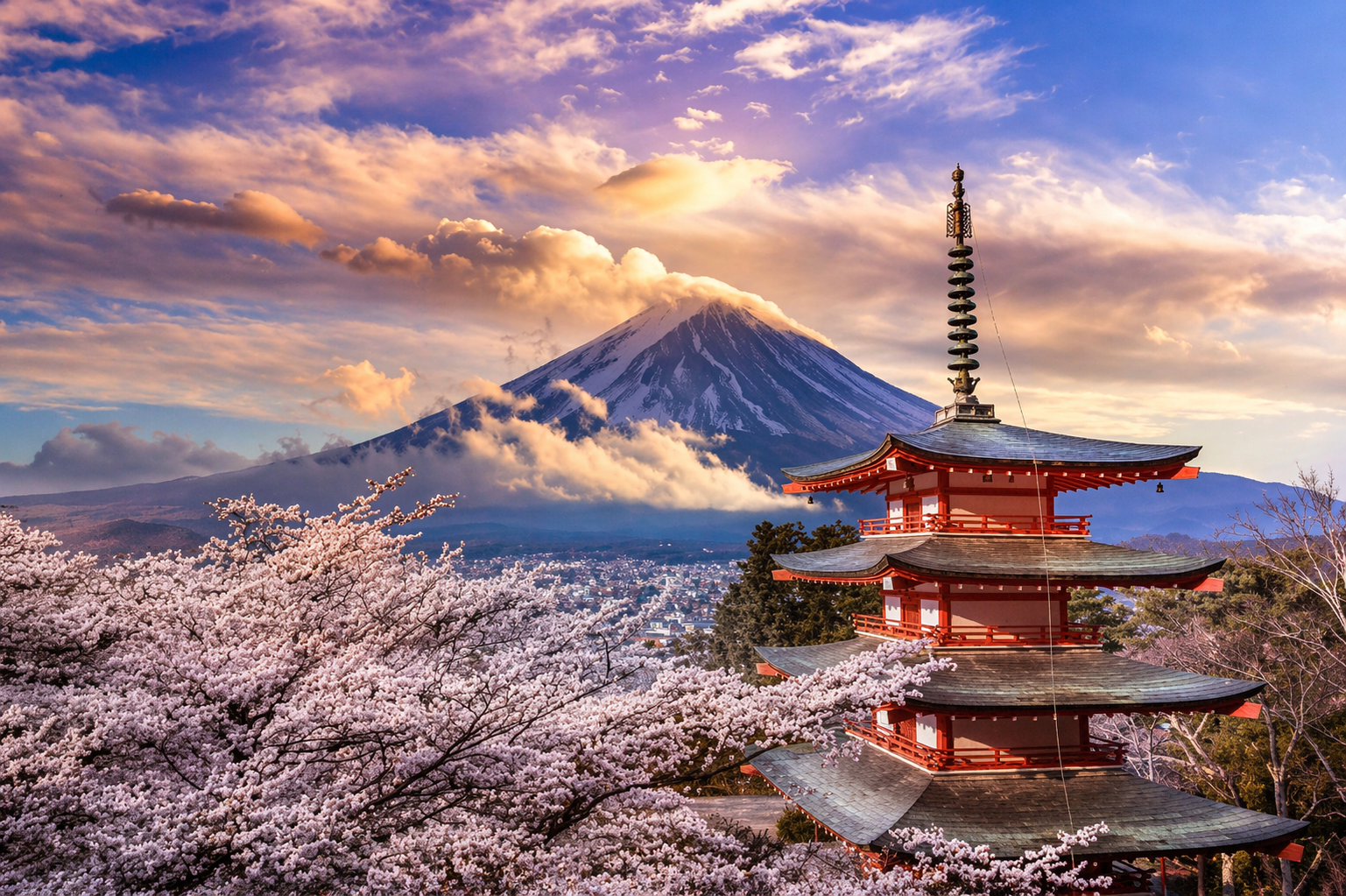
Yes, your guide can often combine the 5th station with a visit to the Chureito Pagoda or Lake Kawaguchiko during your mt fuji private tour from shinjuku.