
English| USD
Suggested for you
More currencies
Choose a language
Mount Fuji's official climbing season runs from early July through early September, and reaching the 5th Station trailheads from Tokyo requires advance planning. This guide walks you through transport choices, mandatory fees, trail conditions, and the logistics that turn a DIY ascent into a safe, successful summit.
Quick answer
A DIY Mt Fuji tour from Tokyo starts with a direct highway bus to Fuji-Subaru Line 5th Station (2.5 hours, reservations required during climbing season), where you pay the mandatory 4,000 JPY hiking fee and begin the Yoshida Trail ascent. The gate opens at 03:00 and closes at 14:00 daily to prevent dangerous night climbs. Most independent climbers arrive by mid-morning, summit by late afternoon, and descend the same day or stay overnight in a mountain hut.
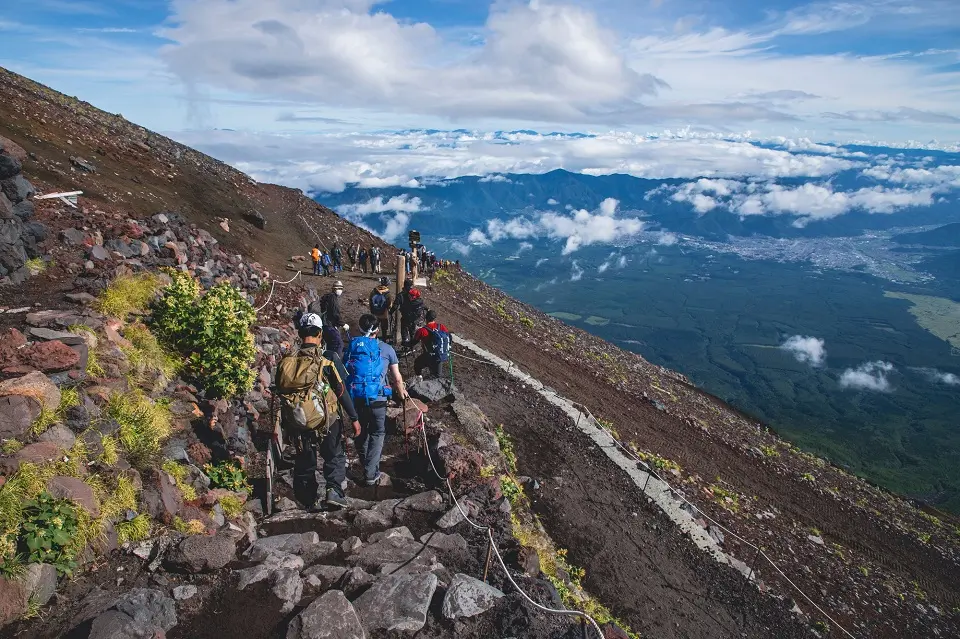
Mount Fuji's summit sits 3,776 meters above sea level, and more than 200,000 people climb it each year—roughly half of them without a guided tour. The Yoshida Trail, accessed via Fuji-Subaru Line 5th Station, accounts for the majority of independent ascents because it offers the most frequent bus service from Tokyo and the densest network of mountain huts. The trail begins at 2,305 meters, cutting the vertical gain nearly in half compared to starting from Fuji's base. Planning a diy Mt Fuji tour from Tokyo means solving three logistical problems: reaching the trailhead, timing your ascent to avoid altitude sickness and weather exposure, and securing overnight accommodation if you intend to watch sunrise from the summit. Highway buses depart Shinjuku Station and Tokyo Station multiple times daily during climbing season, but seats fill weeks in advance. The Fuji-Subaru Line 5th Station enforces a strict 03:00–14:00 access window; arriving outside this range means you cannot start your climb. The gate closure exists to prevent bullet climbing—ascending and descending in a single overnight push, which sharply increases the risk of acute mountain sickness and hypothermia. The Yoshida Trail ascent takes five to seven hours for most hikers, depending on acclimatization pace and rest frequency. The descent, which follows a separate volcanic-sand path, takes three to four hours. Independent climbers typically choose between a same-day round trip (arrive at dawn, summit by early afternoon, descend before dark) or an overnight stay in one of the trail's eight mountain huts, which allows for a pre-dawn summit push to catch sunrise. Hut reservations open in April and book out quickly; walk-ins are not guaranteed space. Weather above 3,000 meters shifts rapidly. Even in mid-summer, summit temperatures drop to near freezing before dawn, and afternoon clouds frequently obscure the peak by 14:00. The Japan Meteorological Agency issues mountain-specific forecasts, and checking conditions the morning of your climb is non-negotiable. Self-guided ascents demand layered clothing, headlamps, adequate water (huts sell bottled water at altitude, but at premium prices), and enough food to sustain effort without relying on hut meals. Altitude sickness symptoms—headache, nausea, dizziness—typically surface above 2,800 meters and require immediate descent if they worsen. The Fuji-Subaru Line 5th Station serves as both trailhead and staging area. It includes a visitor center, restrooms, and several shops selling climbing gear, maps, and oxygen canisters. The mandatory 4,000 JPY hiking fee, collected at the trailhead, funds trail maintenance, waste management, and ranger patrols. Climbing outside the official season—before early July or after early September—means no hut services, no ranger presence, and significantly higher avalanche and rockfall risk. The trails remain physically open, but the Japan Tourism Agency explicitly advises against off-season attempts by anyone without alpine mountaineering experience.
“The Yoshida Trail begins at 2,305 meters, cutting the vertical gain nearly in half compared to starting from Fuji's base.”
The Fuji-Subaru Line 5th Station serves as the primary gateway for Mt. Fuji and is accessible via a combination of train and bus services originating from Shinjuku Station in Tokyo. Travelers typically transition from rail to highway bus to reach this high-altitude trailhead.
JR Chuo Line (Limited Express Fuji Excursion) from Shinjuku to Kawaguchiko Station
Fujikyuko Bus from Kawaguchiko Station to Fuji-Subaru Line 5th Station
Direct Highway Bus from Shinjuku Expressway Bus Terminal to Fuji-Subaru Line 5th Station
The direct highway bus from Shinjuku offers the most efficient transit, eliminating the need for transfers at Kawaguchiko Station. Ensure you plan your arrival within the designated daily window to align with mountain access protocols.
The gate for the Fuji-Subaru Line 5th Station operates on a daily schedule to manage visitor flow. You must plan your arrival to fall within the designated access window.
The Fuji-Subaru Line 5th Station arrival window is consistent throughout the operational season. Access is restricted outside of these daily hours.
This schedule suits early starters comfortable with a long day of hiking and public transport. Total duration is approximately 14–16 hours from Tokyo departure to return.
Board a highway bus from Shinjuku to Fuji-Subaru Line 5th Station (2.5 hours). Book tickets in advance during climbing season.
Register at the gate, pay the 4,000 JPY hiking fee, and acclimate for 30–60 minutes before starting your ascent.
Start climbing toward the summit via the most popular route. Allow 5–7 hours to reach the top, depending on pace and rest stops.
Reach the peak, walk the crater rim, and visit the summit shrine. Spend 30–60 minutes before beginning your descent.
Follow the dedicated descent trail back down (2–3 hours). Aim to return before the 14:00 gate closure affects new climbers.
Board your reserved return bus from the 5th Station. Arrive back in Shinjuku by early evening.
Plan ahead to ensure a safe and successful climb during the official July–September season.
Everything you need to know about diy mt fuji tour from tokyo
Planning a trip independently is straightforward if you coordinate your transport from Shinjuku to the Fuji-Subaru Line 5th Station. Travelers often enjoy the flexibility of setting their own pace while exploring iconic Japanese landmarks.
Every visitor must pay a mandatory hiking fee of 4,000 JPY per person. This contribution supports essential trail maintenance and safety measures on the mountain.
The gates are open daily from 03:00 to 14:00. Please ensure your arrival aligns with this window to ensure access to the trails.
The gate is closed from 14:00 to 03:00 every day. Adhering to these strict hours is necessary for managing trail traffic and safety.
Night-time climbing is restricted to prevent dangerous bullet climbing practices. You must arrive within the designated 03:00 to 14:00 time frame for your excursion.
While guided trips offer logistical support, independent travel provides autonomy for those comfortable with transit navigation. You manage your own schedule and visit sequencing without a group.
The official location is Fuji-Subaru Line 5th Station, Fujiyoshida, Yamanashi 403-0005, Japan. Verify this address before starting your journey to the trailhead.
Mt Fuji Day Tours from Shinjuku
Read more GuideHow to Get to Mt Fuji from Shinjuku
Read more GuideMt Fuji Tour Prices
Read more GuideMt Fuji Excursion Trains from Shinjuku
Read more Tickets & toursPrivate Mt Fuji Tours from Shinjuku
Read more Tickets & toursMt Fuji Bus Tours from Shinjuku
Read more